


By Cameron Cooper, DVM
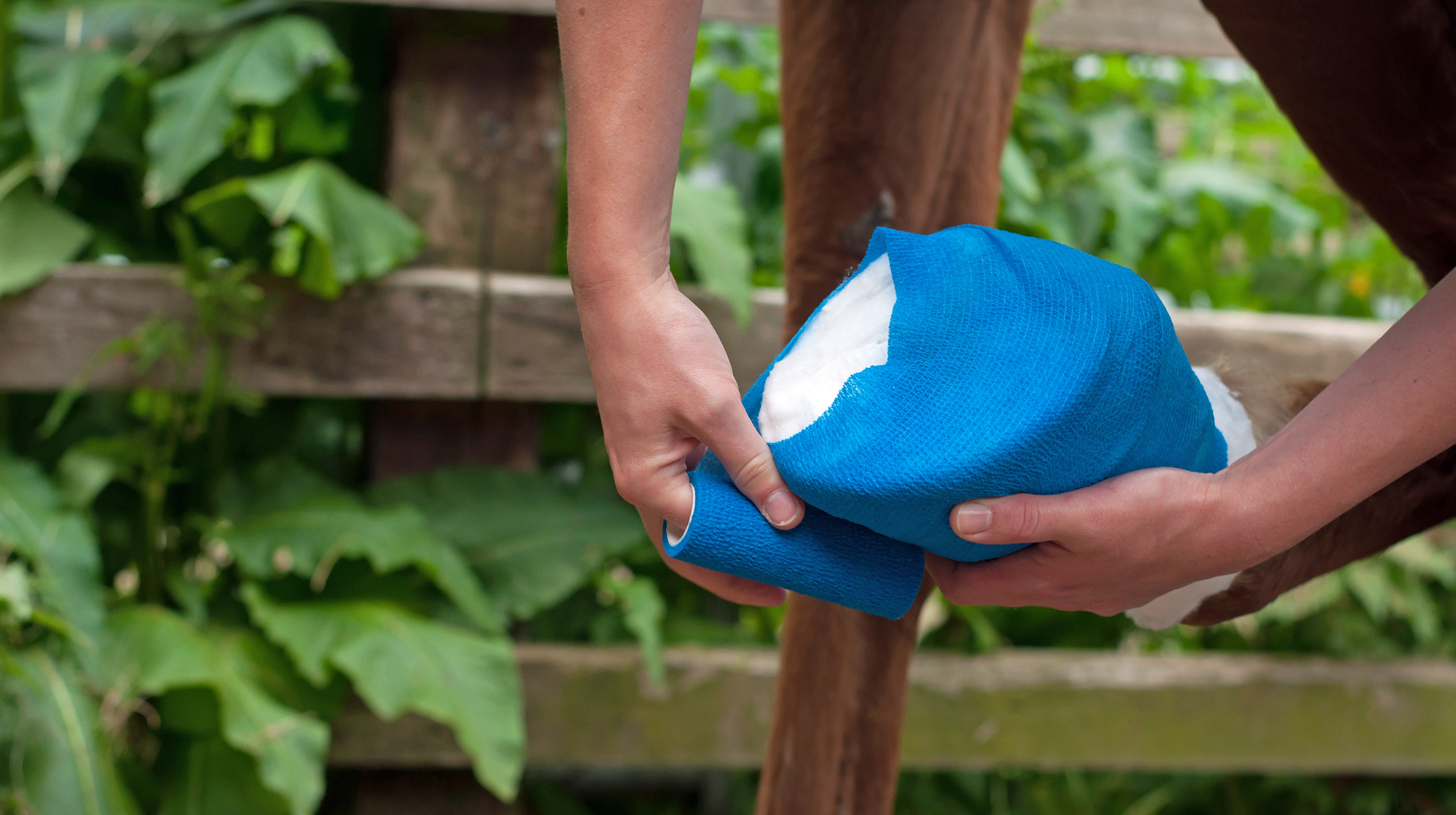
Horses are accident prone, plain and simple. Much to the equine owner’s chagrin, it is something that keeps us equine veterinarians in business.
A pitfall many horse owners fall into is the notion of “it’s not that bad” when it comes to injuries your horse has sustained. Some locations really are “not that bad.” Others are more serious than you might think. Compared to other large animals, horses have relatively thin skin. Combine that with being incredibly strong, horses are at an increased rate of getting lacerations or cuts especially on their legs. From the knee/hock down to the hoof, the equine leg is mostly skin, tendon and bone with the occasional blood vessel. As a result, lacerations to this area often look deceivingly innocuous. In particular, lacerations to the heel bulb often get neglected more than they should. Heel bulb lacerations are any wound that occurs to the back of the foot above the coronary band and generally occur when a horse gets its leg wrapped around a wire or sticks its foot through a piece of metal.
As with any injury, it is always important to consider all the anatomy that could have been affected. There are several important structures around the heel of a horse’s foot. There are veins, arteries and nerves that run down the outside (lateral) and inside (medial) part of the heel. The superficial and deep digital flexor tendons run down the midline of the back of the heel. The coffin joint extends up above the coronary band to attach onto the short pastern bone. All these structures are very important to the overall wellbeing of the horse.
Lacerations involving the artery often result in a copious amount of bleeding, but this is not always obvious. In severe cases, lacerations can sever both lateral and medial digital arteries that supply nutrients to the foot. This can compromise the whole integrity of the hoof capsule. Lacerations of the flexor tendons can result in severe lameness and will likely mean the end of the horse’s athletic career. The coffin joint is a very important synovial structure, and any insult can result in bacteria infiltrating the joint. An infection to this joint can lead to long term arthritic changes and issues with soundness if not treated properly.
Even if your horse is lucky enough to miss all these important structures, there are other factors that can complicate the wound healing process. The heel is meant to move. Take a look at the surface of the shoes the next time your farrier pulls them. They should be shiny or at least smooth on the back part where the heels are. This is because the heel moves to absorb the load of a 1000lb animal. Improper stabilization of a heel bulb laceration can lead to at best delayed healing and at worst proud flesh.
There are some very important structures that can be involved in heel bulb lacerations. Damage to some of these structures can gravely threaten long term soundness of the horse. It is important to always think critically about what structures could be involved when you notice that your horse has an injury. Early veterinary intervention can mean the difference between a sound horse and a lame horse once the skin has healed. If you are ever in doubt, please seek veterinary help immediately when you notice an injury to your horse.
